
Why Strength Training Matters for Injury Prevention
Muscle is your body's shock absorber
Every time your foot hits the pavement, your knee absorbs several times your body weight. When you change direction on a tennis court, your hips and ankles manage forces that would snap a lesser structure. Muscle turns those forces into controlled movement — it decelerates, stabilises and spreads load across the joint rather than letting it concentrate in one vulnerable spot.
When muscle is weak or fatigued, that protection fades. The load doesn't disappear; it shifts to ligaments, tendons, joint capsules and cartilage, which are far less forgiving. Most injuries we see in clinic aren't the result of one dramatic accident. They build quietly over months of asking unconditioned tissue to do more than it can.
What strength training actually changes in the body
Progressive resistance training does more than make muscles bigger. It triggers adaptation in every tissue that carries load:
- Tendons become stiffer and more resilient, storing and releasing energy more efficiently — a change that typically takes twelve weeks or more of consistent loading.
- Bone remodels and becomes denser in response to stress, which matters enormously as we age.
- Cartilage is nourished by movement; joints loaded regularly within their capacity tend to tolerate more, not less.
- Neuromuscular control improves, so your brain recruits the right muscles at the right moment and you react faster when something goes wrong.
That last point is often the most valuable. Many injuries happen in the half-second where your body must correct a stumble, absorb an awkward landing or brace against an unexpected push. Strength training makes that half-second work in your favour.
The everyday pay-off
Injury prevention isn't only for athletes. Strength underpins almost everything you do without thinking about it:
- Carrying shopping upstairs without your lower back complaining.
- Getting up off the floor after playing with children or grandchildren.
- Lifting a suitcase into an overhead locker.
- Steadying yourself on a wet pavement or an uneven kerb.
- Gardening for an afternoon without paying for it with three days of pain.
For adults over 60 the stakes rise. Falls are one of the leading causes of serious injury in the UK, and lower limb strength, grip strength and balance are among the strongest predictors of who falls and who doesn't. Rising from a chair five times in under twelve seconds, or holding a single-leg balance for thirty seconds, is a reasonable goal — and both are trainable at any age.
For sport, it's a performance multiplier
If you run, play football, swim, cycle or dance, strength work lets you hold better positions for longer. A runner with strong glutes and calves doesn't collapse into the knee on every stride. A footballer whose hamstrings are conditioned for eccentric load — through exercises such as Nordic hamstring curls — is far less likely to pull one while sprinting.
Good programmes for sport focus on a few areas: single-leg strength and control, hip and trunk stability, hamstring and calf resilience, and landing mechanics. Add a little plyometric work — hops, bounds, jumps — once you're strong enough, and you teach your body to absorb and redirect force, not just produce it.
How to train so it protects rather than punishes
The principles are simpler than the internet suggests:
- Start where you are. Two sessions a week is enough to progress. Consistency beats intensity.
- Apply progressive overload. Add a little weight, a repetition or an extra set every week or two, giving tissue time to adapt.
- Train the whole body. A squat or split squat, a hip hinge such as a Romanian deadlift, a push, a pull, a carry and a calf raise cover most of what matters.
- Work at moderate effort. Two to three sets of six to twelve repetitions, stopping with two or three good reps left in the tank, is a reliable formula.
- Respect recovery. Muscle adapts while you rest. Sleep, protein and at least one full rest day a week are part of the programme.
- Build gradually. Most training injuries follow a sudden jump in volume or intensity, not lifting weights in the first place.
When to ask for help
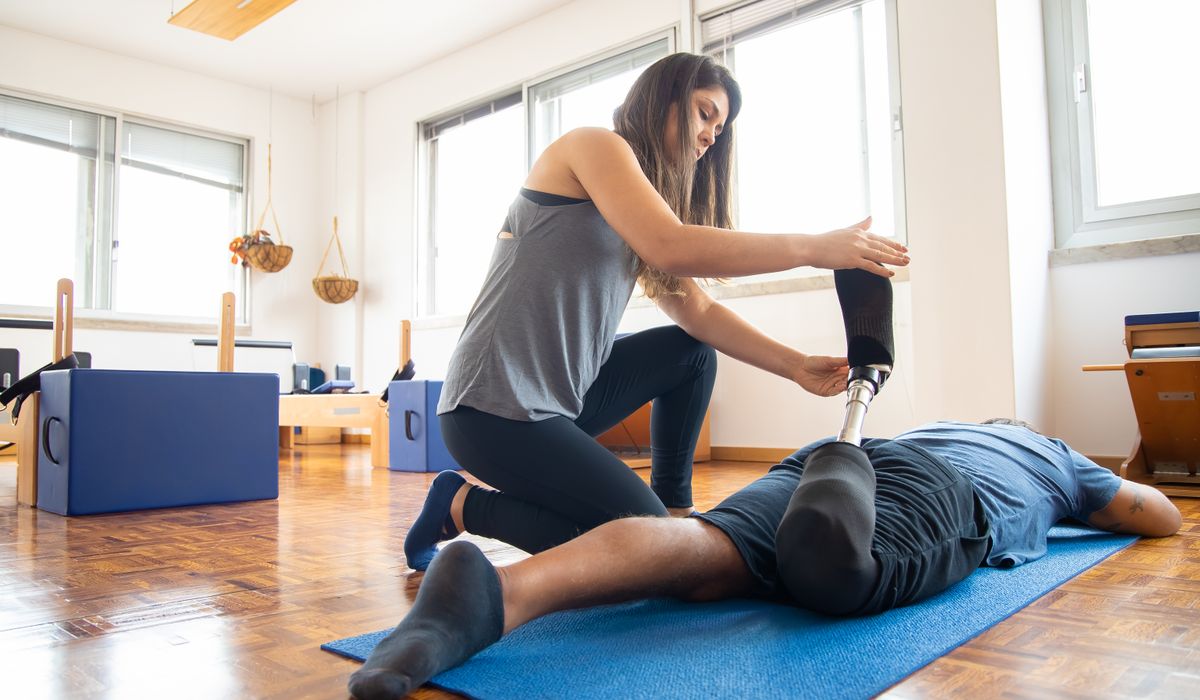
Some people avoid strength training because of an old injury, a niggling knee or a back that "goes" every few months. In most cases that's exactly when supervised loading helps most — the tissue needs building back up, not wrapping in cotton wool. It simply has to be done from the right starting point, with the right exercises, at the right pace.
A musculoskeletal assessment identifies where your weak links are — a hip that doesn't rotate, a shoulder that lacks control, a calf that hasn't recovered properly — and a graded plan can work around pain while you rebuild capacity. A holistic view matters too: sleep, stress, nutrition and the demands of your work all shape how much load you can safely handle and how well you recover.
Strength training isn't glamorous, and progress can feel slow. But it remains one of the most reliable investments you can make in staying active, capable and injury-free for the decades ahead.


An overview of the precautions, benefits and adapted techniques used when treating older patients with spinal complaints safely.
Both therapies treat musculoskeletal pain, but their approaches, techniques and training differ in important ways for patients seeking care.
Supportive footwear with good arch support and cushioning can reduce heel pain and improve comfort throughout the day.
Conservative podiatry care can resolve many ingrown toenails using gentle techniques, reducing the need for more invasive procedures.