
How Physiotherapy Can Help You Recover From a Frozen Shoulder
What Is Actually Happening Inside a Frozen Shoulder
Frozen shoulder, or adhesive capsulitis, is a condition where the capsule of connective tissue surrounding the shoulder joint becomes inflamed and then thickens and tightens. The result is a shoulder that hurts and, over time, refuses to move in the way it once did. It typically unfolds in three phases, and knowing which phase you are in changes everything about how you should be treated.
During the freezing phase, which can last anywhere from two to nine months, pain dominates. Night pain is common, and even small movements can be sharp and unpredictable. The frozen phase follows, often lasting four to twelve months, when pain may ease but stiffness becomes the main problem. The thawing phase is the gradual return of movement, and it can take a year or more to complete.
This matters because a programme that helps in one phase can aggravate another. A good physiotherapist will assess where you are and adapt accordingly.
Why Physiotherapy Is Central to Recovery
Many people are told simply to wait it out, and it is true that most frozen shoulders do eventually improve. But "eventually" can mean two to three years of restricted sleep, difficulty dressing, and avoiding the activities you enjoy. Physiotherapy aims to shorten that timeline and reduce the discomfort along the way.
There are three broad goals:
- Manage pain so you can sleep and function day to day.
- Preserve and restore range of motion in the joint capsule and surrounding tissues.
- Rebuild strength and control in the shoulder blade and rotator cuff so the joint moves well once mobility returns.
Early, appropriate physiotherapy is associated with better outcomes, particularly when it is matched carefully to your stage of recovery.
Manual Therapy Techniques Used in Clinic
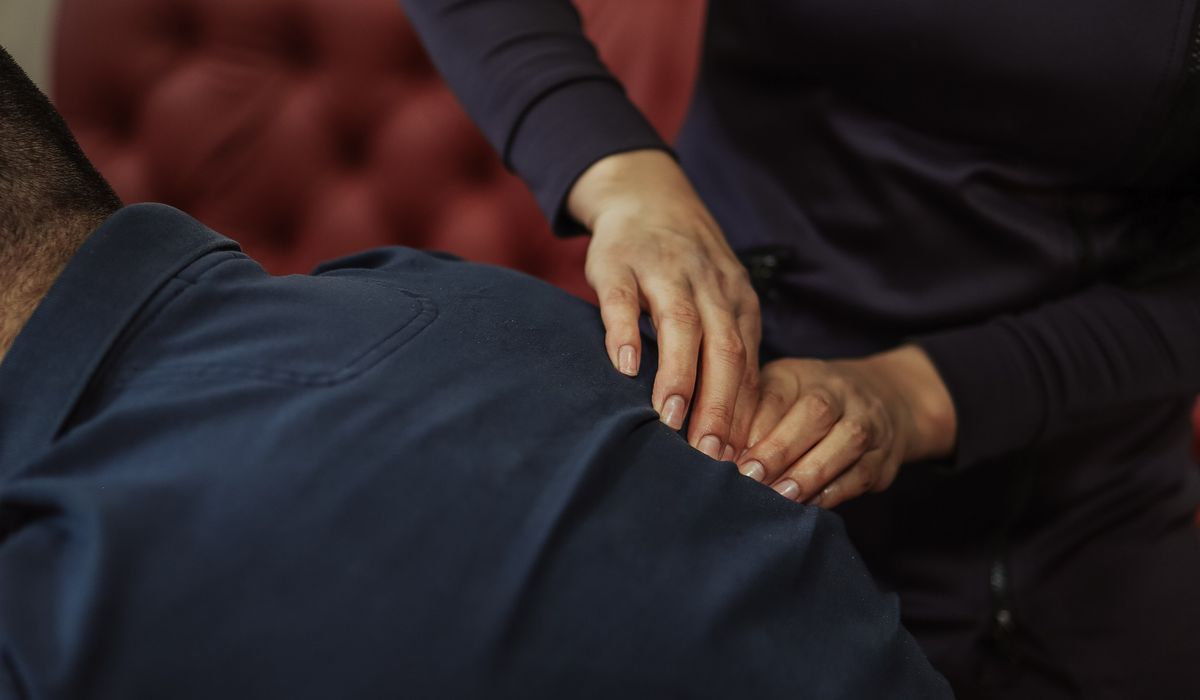
Hands-on treatment can be genuinely helpful, especially when stiffness is the limiting factor. Your physiotherapist may use several approaches in a single session:
- Joint mobilisation. Gentle, graded movements of the ball within the socket, applied at varying intensities, to encourage the capsule to lengthen and to reduce pain.
- Soft tissue release. Work through the pectorals, upper back, deltoid and rotator cuff muscles, which often tighten protectively around a painful shoulder.
- Scapular mobilisation. The shoulder blade must glide freely on the ribcage for the arm to lift overhead. Restricted scapular movement can be a major hidden barrier.
- Stretching into the capsule. Controlled end-range holds in specific directions — often external rotation and elevation — to target the tightest parts of the capsule.
Manual therapy is rarely enough on its own. It works best as a warm-up to exercise, loosening tissue so that your own movement can do the lasting work.
Exercises That Restore Movement Gently
Exercise is the engine of recovery, but the dosage matters. In the painful freezing phase, aim for frequent, gentle movement rather than long, aggressive stretching. Little and often is the rule.
- Pendulum swings. Lean forward, let the arm hang, and allow small circles and gentle forwards-and-back swings. This uses gravity to move the joint without muscular effort.
- Table slides. Sit at a table with a towel under your hand and slide the arm forwards, letting the table take the weight.
- Wall walks. Walk your fingers up a wall to the point of a gentle stretch, then ease back down. Repeat several times daily.
- Towel stretch behind the back. Hold a towel behind you, one hand over the shoulder, one at the waist, and gently pull upward with the top hand.
- Cross-body stretch. Use the good arm to draw the affected arm across your chest, feeling a stretch at the back of the shoulder.
- Scapular setting. Gently draw the shoulder blade down and back, holding for a few seconds. This restores the foundation for arm movement.
As you move into the frozen and thawing phases, your physiotherapist will progress you to resistance band work, light weights and more demanding end-range stretches. Expect some discomfort with stretching, but not sharp pain that lingers for hours afterwards.
The Holistic Side of Shoulder Recovery
A shoulder does not exist in isolation, and recovery is rarely just about the joint. Sleep, stress, posture and general health all influence how tissue heals and how much pain you feel.
Sleep is worth prioritising. Many people with a frozen shoulder lose hours of rest, which lowers pain tolerance and slows recovery. Try sleeping on your back or on the unaffected side, with a pillow supporting the affected arm in a comfortable, slightly forward position. A supportive pillow under the elbow can take tension off the capsule.
Posture matters too. Rounded shoulders and a forward head position increase load on the front of the shoulder capsule. Regular breaks from screens, gentle thoracic extension over a rolled towel, and simple upper back strengthening all help.
Stress and fear of movement also play a role. Pain makes us protective, and protecting a stiff shoulder too much allows it to stiffen further. A calm, gradual, patient approach — with breathing, relaxation and steady reassurance — often helps people move more freely than they expected.
Nutrition and hydration support tissue repair, and if you have diabetes or thyroid conditions, mention them to your clinician, as these are linked with longer or more stubborn frozen shoulder episodes.
Making Steady Progress and Knowing When to Ask for Help
Frozen shoulder is a condition of patience, but it is not a condition of helplessness. Progress is often measured in small gains — reaching a shelf, fastening a bra, sleeping through the night — and those gains add up. Keep a simple note of what you can do each fortnight, because improvement is easier to see over weeks than days.
Speak to a musculoskeletal physiotherapist if pain is severe, if movement is steadily worsening, or if you have lost significant function. A tailored assessment, a phased exercise programme and hands-on treatment can make a meaningful difference to how quickly and comfortably you get your shoulder back.


A step-by-step look at assessment, treatment planning and the questions you should ask your physiotherapist before your first session.
From runner's knee to shin splints, understand the warning signs and training habits that keep you injury-free on the road.
A structured rehabilitation plan helps you rebuild strength, balance and confidence before you return to competitive play again.
Building muscle through progressive resistance work can protect joints and improve performance in everyday and sporting activities significantly.